
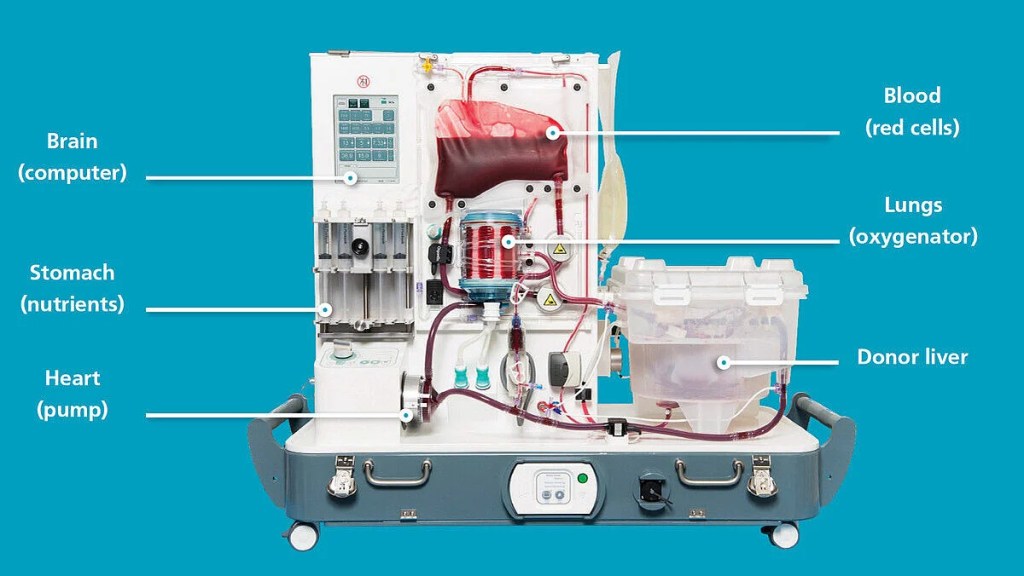
- OrganOx’s METRA Device
The global transplant market is projected to continue growing at a double-digit rate and surpass $10 billion by 2033. Hence, we are now seeing significant acquisitions worth billions occurring in the space of the big B. Recently, the University of Oxford spin-out OrganOx was acquired by Terumo, a global medical technology company from Tokyo, Japan, for US$1.5 billion. Earlier this year, OrganOx raised $142 million to expand its commercial reach and invest in R&D. HealthQuest Capital led the round, with additional backing from BGF Investment Management, Lauxera Capital Partners, Sofina, Soleus Capital, and Avidity Management. This transaction marks the largest acquisition of a spin-out from the University of Oxford.
OrganOx’s Value add
OrganOx was founded in 2008 by engineering Professor Constantin Coussios and transplant surgeon Professor Peter Friend. Since then, OrganOx has positioned itself as a leader in advanced organ preservation technology. They utilize a technique known as Normothermic Machine Perfusion (NMP) devices that circulate warm, oxygen-rich fluid through the organ, mimicking the conditions of the human body. This enables clinicians to evaluate organ function in real-time and make more informed decisions regarding transplantation. The technology has expanded the pool of viable organs for transplant—including those from marginal donors—while reducing reliance on emergency and night-time procedures. OrganOx’s technology can preserve donated tissue for up to 24 hours, providing transplant teams and patients with greater flexibility in scheduling complex surgeries, while also enabling clinicians to evaluate the liver’s function before the procedure. To date, OrganOx systems have supported over 6,000 transplants worldwide, and the company’s own studies have shown that they have been able to halve the number of discarded livers compared to the traditional cold storage solution.
Recognition
OrganOx was recently awarded the Royal Academy of Engineering’s MacRobert Award, the UK’s longest-running and most prestigious prize for engineering innovation. This recognition highlights the life-saving impact of the technology, which enables more transplants and helps reduce waiting lists. Oxford University was an early backer of OrganOx, providing proof-of-concept funding through its University Challenge Seed Fund and later investing further via the Spinout Equity Management Fund. OrganOx also secured significant support from the Royal Society as the first investment of its Enterprise Fund (later acquired by Amadeus Capital Partners). In addition, many of the company’s clinical translation efforts, undertaken in collaboration with the University, received funding from the National Institute for Health Research (NIHR) through the Oxford Biomedical Research Centre (BRC) and multiple Invention for Innovation (i4i) awards.

What’s Next for OrganOx?
OrganOx officially launched in the U.S. in 2022 and has been approved by regulatory bodies in Europe, the U.K., Australia, and Canada. In addition to their NMP device, OrganOx is entering human clinical trials this year, following FDA approval, to assess the safety and functionality of their genetically engineered liver derived from pigs. This is in collaboration with eGenesis, a biotechnology company developing human-compatible engineered organs.
In November 2024, OrganOx and eGenesis entered into an exclusive clinical co-development agreement to advance a potentially lifesaving therapy for the approximately 35,000 patients in the United States who are hospitalized each year with acute or acute-on-chronic liver failure. These patients currently have few treatment options and face short-term mortality rates of up to 50 percent. By combining eGenesis’ human-compatible, genetically engineered porcine liver with OrganOx’s ELC system to support the function of a failing native liver, this approach may enable liver recovery or provide critical time for a transplant to be received.
The planned Phase 1 trial will enroll up to 20 patients across multiple U.S. centers. Participants will include those with ACLF (Acute-on-Chronic Liver Failure, Grade 2–3) and hepatic encephalopathy (A decline in brain function caused by the liver’s inability to remove toxins (like ammonia) from the blood – ≤ Grade 3) who are ineligible for transplant. The study will evaluate the safety, performance, and clinical activity of the EGEN-5784 liver in combination with the OrganOx ELC system.
 Last Stop Biotech
Leave a comment