
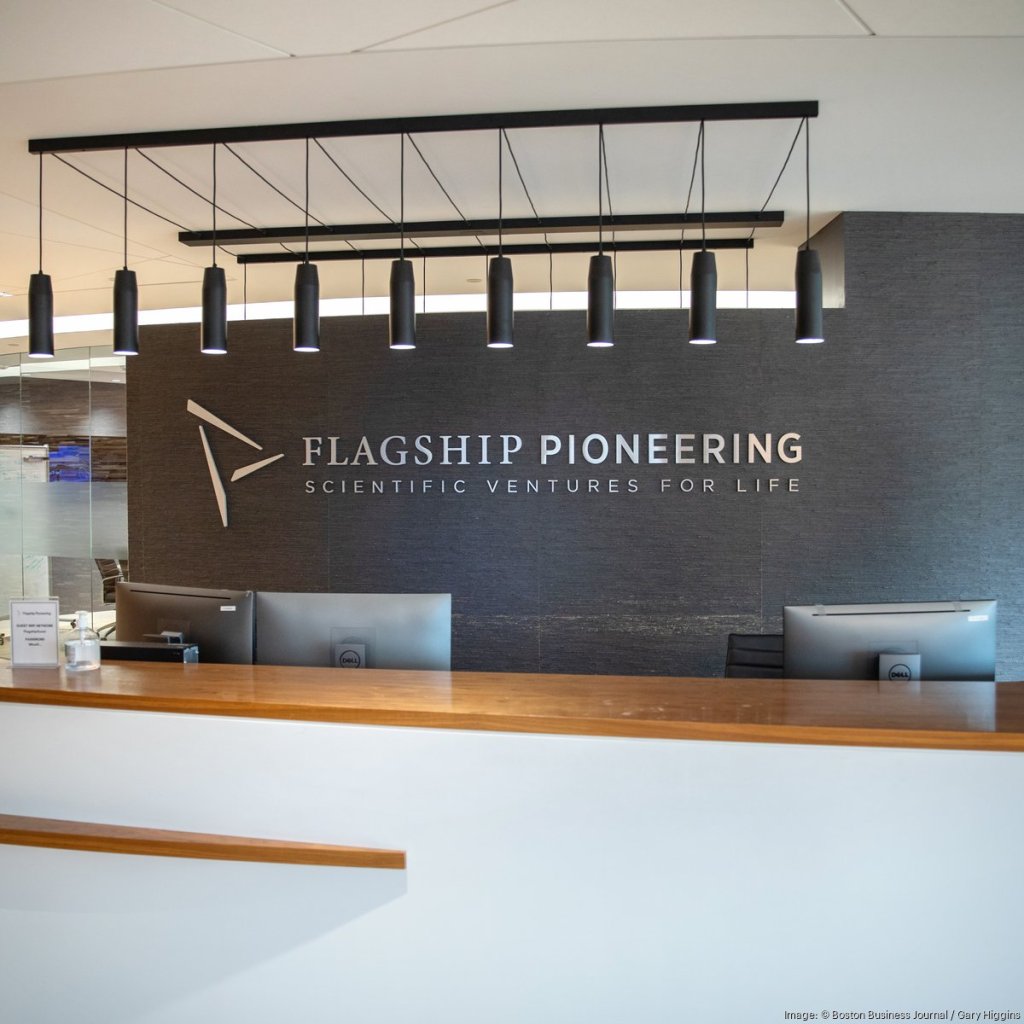
Flagship, Pioneering a biotech incubator located in Cambridge, Massachusetts, spun out one of its companies to bring AI automation to the labs. Lila Sciences has raised an impressive $235 million in Series A funding to push beyond the current limits of drug discovery through the use of automation and artificial intelligence.
The round—more than doubling the AI biotech’s $200 million debut in March—was led by Braidwell and Collective Global, with additional backing from Altitude Life Science Ventures, Alumni Ventures, ARK Venture Fund, Common Metal, and a subsidiary of the Abu Dhabi Investment Authority, among others.
Founded in 2023 by Flagship General Partner Geoffrey von Maltzahn, Ph.D., Lila is setting out to redefine how science is done. Its vision: to fully automate the scientific method through autonomous research labs guided by what it calls a “scientific superintelligence.” The company’s chief scientist, George Church, Ph.D.—the CRISPR pioneer behind some of biotechnology’s most audacious ideas, from species de-extinction to engineered organ transplants—brings both credibility and bold ambition to the effort.
With this new funding, Lila plans to accelerate the rollout of its AI Science Factories, where machine learning models continuously generate hypotheses, design experiments, run them, learn from the results, and iterate—effectively performing the cycle of discovery at machine speed. According to von Maltzahn’s announcement, the capital will also fuel new facilities in Boston, San Francisco, and London, signaling the company’s global ambitions. In a field where innovation often hinges on speed and precision, Lila is betting that fully automated science could become not just a tool, but a revolution in how discovery itself unfolds.
Others in lab automation
A startup based in Seattle, named Potato, has recently received $4.5 million in funding to develop an AI assistant. The two-year-old company has unveiled a platform that functions as an AI-powered research assistant, designed to help scientists formulate hypotheses, develop optimized experimental protocols, draft manuscripts for publication, and critically evaluate journal articles.
Founded in 2023 by neuroscientist Nick Edwards—whose background spans the NIH, BCG, and Illumina—and seasoned CTO Ryan Kosai, Potato aims to make scientific research not just automated, but consistently reproducible, tackling one of science’s most persistent hurdles.
“Our goal is to accelerate scientific discovery,” Edwards said. He highlighted the fundamental issue: “Life science research remains incredibly costly, time-consuming, and inefficient because so much of it is still manual. Scientists spend years absorbing literature, defining problems, and mastering experimental techniques.”
The founders of Potato are focused on their technology, strictly adhering to the principle of data reproducibility. In research, scientists only believe in data that is reproducible. One data point, one experiment, is never enough to come to any conclusion. For their technology to be adaptable at scale, they will have to convince the broader scientific community that they can produce reproducible data.
Beyond improving reproducibility, Potato is targeting two other major pain points in research: the overwhelming flood of scientific literature and the high cost of experimentation. The manual task of sifting through and synthesizing published studies remains a significant bottleneck in the research process. To overcome these challenges, Potato’s AI agents automate literature reviews, generate experimentally sound protocols based on peer-reviewed data, and integrate computational analysis with lab automation to streamline execution. Edwards described the company’s broader vision as “closed-loop, autonomous science—with humans and AI working side by side as collaborators.”
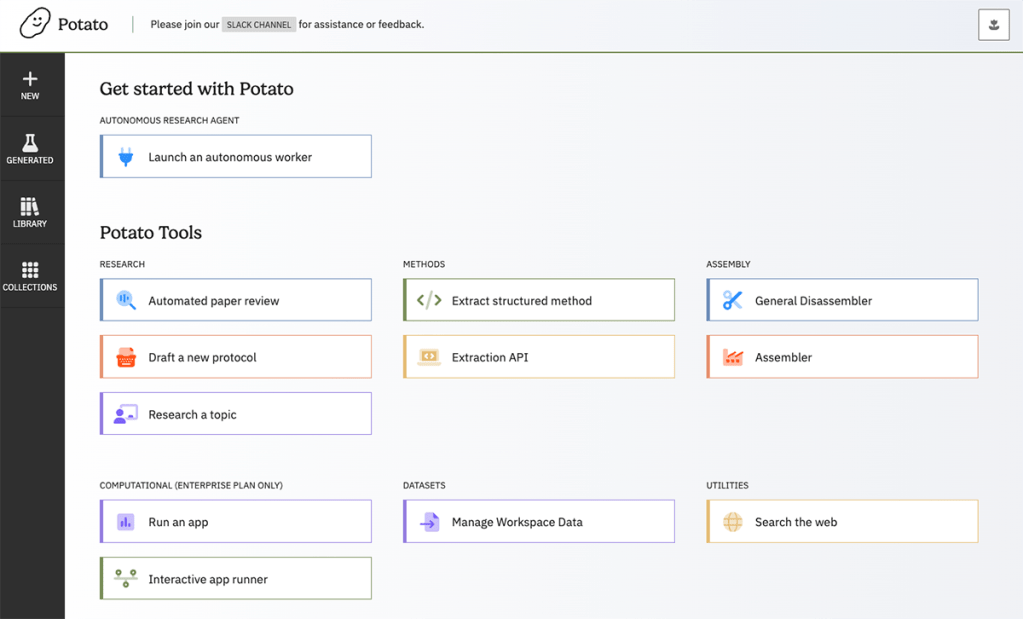
Initially centered on biotechnology, Potato intends to expand swiftly into adjacent domains such as materials science and chemistry. Backed by Draper Associates and bolstered by significant participation from Dolby Family Ventures, the funding round also includes support from Boost VC, Ensemble VC, Silicon Badia, Alumni Ventures, Defined, and The FounderVC, along with strategic angel investors Michael Liou and Geoff Entress. With this strong investor lineup, Potato is well-positioned for rapid growth and scaling.
 Last Stop Biotech
Leave a comment