
In October of this year, AstraZeneca has been busy investing heavily, to the tune of multiple billions, in companies driving the next generation of drug discovery. This week, AstraZeneca finalized a deal with Algen Biotechnologies for $555 million.
The collaboration is designed to harness Algen’s artificial intelligence–driven discovery capabilities to accelerate the identification of novel therapeutic targets in immunology. Through this partnership, Algen will deploy its proprietary AlgenBrain platform to support AstraZeneca’s early-stage drug discovery programs. The initiative focuses on the discovery of next-generation immunomodulatory therapies by integrating CRISPR-based gene modulation with computational approaches for target identification and validation.
Under the terms of the agreement, AstraZeneca will retain exclusive rights to develop and commercialize therapeutic candidates directed against a defined set of targets emerging from the collaborative research efforts.
How Does Algen’s AI Work?

Experimental perturbations – Step #1
Using their tunable CRISPR system, Algen modulates (“perturbs”) many genes in human, disease-relevant cell types. These modulations cover a range of levels rather than simple knockout or overexpression. Also done at the single-cell level.
RNA expression monitoring and time/disease trajectory data capture – Step #2
As cells with perturbed genes evolve (through time, or through induced disease-like conditions), their RNA expression profiles are monitored, capturing dynamic changes over disease progression.
Computational modeling – Step #3
The AI/deep learning side (AlgenBrain) takes in these datasets: perturbation data, gene expression across cell types, time, and possibly other omics. It tries to infer which genes / regulatory networks are causally implicated in disease trajectories (not just associated). It likely uses foundation models or “disease trajectory” models to map progression, find points where intervening yields maximal reversal or benefit.
Target identification & validation – Step #4
From the candidates the AI highlights, Algen would then validate targets through further experiments (via the CRISPR perturbation system, functional assays, possibly disease models) to ensure that modulating the target gene results in desirable phenotypic outcomes and an acceptable safety/therapeutic index.
Translation toward therapy – Step #5
Once targets are validated, they can be developed into therapies (small molecules, gene therapies, biologics, combinations). The platform is designed to be disease-agnostic: it can be applied to immunology, oncology, metabolism, etc.
AstraZeneca Partners with CSPC Pharmaceutical – Deal worth a total of $5.5 Billion
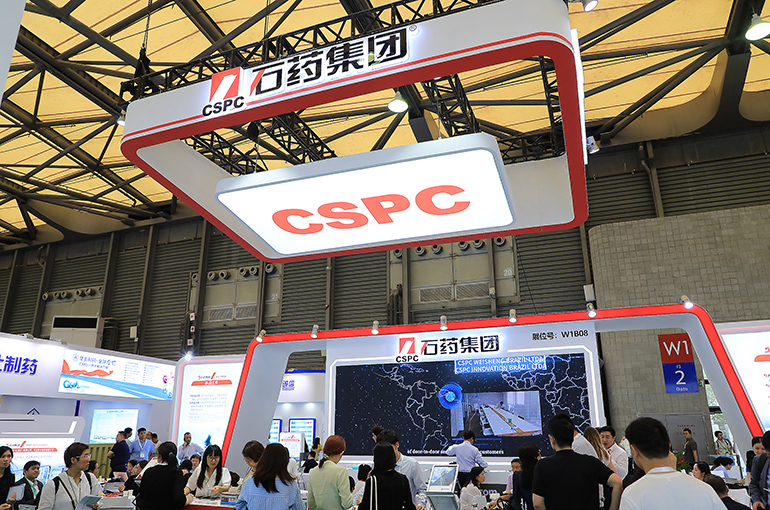
In June of this year, AstraZeneca returned to CSPC, with whom they had initially partnered in October 2024 to obtain a license for the Shijiazhuang-based biotech’s preclinical cardiovascular therapy in a deal valued at $100 million upfront. In June of this year, AstraZeneca added another $110 million to the deal with CSPC to begin work on finding oral drugs for chronic diseases.
AstraZeneca stated that the new agreement “strengthens the ongoing collaboration” between the two companies. Under its terms, CSPC could receive up to $1.62 billion in potential development milestones and up to $3.6 billion in commercial sales milestones, along with single-digit royalties on any successfully marketed therapies. As part of the collaboration, CSPC will leverage its AI-driven, dual-engine drug discovery platform to evaluate the binding dynamics between target proteins and compound libraries. This computational approach aims to identify and optimize molecules with the greatest likelihood of clinical success, integrating structure-based modeling and predictive analytics to enhance early-stage candidate selection, according to the joint announcement.
CSPC has developed what they call an “AI-driven, dual-engine, efficient drug discovery platform.” It is used particularly for discovering and optimizing small-molecule candidates (especially oral drugs) for preclinical development. The platform is being applied across multiple disease indications, including immunology and chronic diseases, among others.
How Does CSPC’s AI Platform Work?
Target protein-compound binding analysis – Step #1
The AI platform analyses “binding patterns” between target proteins and existing compound molecules. This involves modeling how compounds bind, likely using structural biology, docking, possibly molecular dynamics, etc.
Optimization of molecular structures – Step #2
After identifying promising compounds, the platform conducts “targeted optimization” to improve not just binding but also developability — e.g., properties like solubility, toxicity, ADME (absorption, distribution, metabolism, excretion), etc.
Dual-engine approach – Step #3
The “dual-engine” likely refers to having two complementary AI engines/models/methods working together (e.g., one engine for binding / structure-based design, another for ADME / safety/developability). The sources do not fully specify, but that is the usual meaning in these contexts.
Screening & prioritization – Step #4
The platform screens a large number of existing compounds, possibly virtual compounds (in silico), or modifications of known scaffolds. The AI then ranks/prioritizes based on multiple criteria.
Apply select candidates to preclinical stages – Step #5
After computational selection/optimization, candidates are advanced to preclinical testing. In CSPC’s partnership with AstraZeneca, the goal is to generate preclinical candidates for high-priority targets.
AstraZeneca Team ups with Hungarian AI Specialist Turbine

Today, AstraZeneca turned its sights towards Turbine and established a collaboration with the Hungarian artificial intelligence company Turbine to advance its antibody–drug conjugate (ADC) discovery and optimization programs. The partnership will integrate Turbine’s mechanistic simulation platform with AstraZeneca’s experimental datasets to accelerate candidate design, improve linker–payload selection, and deepen mechanistic insights into ADC efficacy and safety.
ADCs now constitute a strategic focus within AstraZeneca’s oncology portfolio, serving as a cornerstone of its precision medicine approach. Following the clinical and commercial success of Enhertu and the subsequent FDA approval of Datroway (treatment for HER2-negative adults with breast cancer & non-small cell lung cancer), the company continues to invest in data-driven methodologies to enhance the rational design and translational success of next-generation ADC therapeutics.
The details of the deal were not disclosed. Still, AstraZeneca wants to bring ADC discovery and development in-house after the success of Enhertu and the successful approval of Datroway, which was developed in collaboration with Japanese pharma Daiichi Sankyo.
 Last Stop Biotech
Leave a comment